 03
03Jyotirlinga · Sacred Shiva Kshetra
Kedarnath Jyotirlinga
Rudraprayag, Uttarakhand
05:00–12:00
Morning Darshan (seasonal — May to Oct)
12:00–14:00
Afternoon Break
14:00–21:00
Evening Darshan
03Jyotirlinga · Sacred Shiva Kshetra
Rudraprayag, Uttarakhand
05:00–12:00
Morning Darshan (seasonal — May to Oct)
12:00–14:00
Afternoon Break
14:00–21:00
Evening Darshan
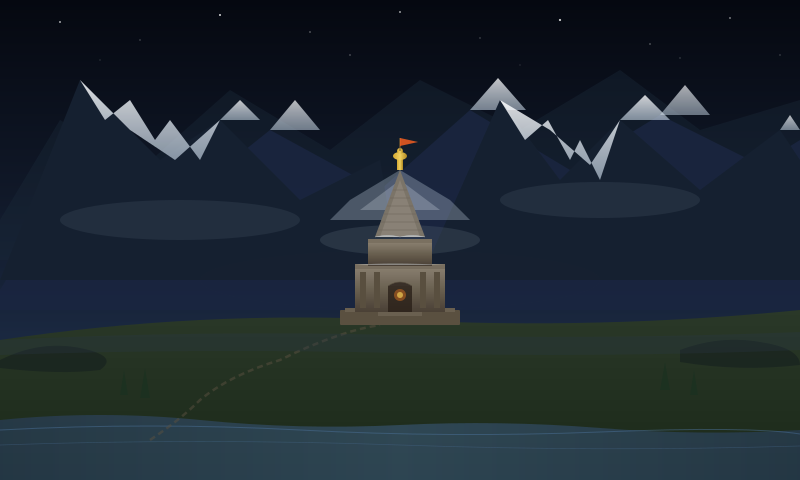
Temple Illustration
Photo gallery coming soon — curated images of Kedarnath Jyotirlinga and its surroundings.
Kedarnath Jyotirlinga rests at an altitude of approximately 3,583 metres (11,755 feet) in the Garhwal Himalayas — among glaciers, high-altitude meadows, and the source streams of the Mandakini river. It is the highest among the 12 Jyotirlingas, the northernmost among the Char Dham, and the most demanding pilgrimage in Hindu tradition.
The temple itself is an austere structure of interlocked grey stone, built in the North Indian Nagara style, standing against a backdrop of Kedarnath peak and its adjoining glaciers. The Bhukund Bhairav temple guards the entrance to the valley. The interior is simple and unadorned — a triangular, rough-hewn rock that serves as the Shivalinga — entirely unlike the elaborately decorated lingas of other Jyotirlingas. This roughness is intentional: it reflects the hump of the bull Nandi (or Shiva's own form as a bull) as he descended into the earth.
The mythology of Kedarnath is inseparable from the Mahabharata. After the war at Kurukshetra, the Pandavas — guilty of fratricide and the deaths of their gurus — sought Shiva's blessing and absolution. Shiva, who did not wish to grant them an audience, fled to the Himalayas in the form of a bull (Nandi). When the Pandavas tracked him down, he partially submerged himself into the earth. Bhima grabbed his hump — which remained above ground — and this hump is the Kedarnath Shivalinga. The remaining parts of Shiva's body emerged at the other Panch Kedar temples across Garhwal: the arms at Tungnath, the face at Rudranath, the navel at Madmaheshwar, and the hair at Kalpeshwar.
Adi Shankaracharya is deeply associated with Kedarnath. He revived and systematised worship at the temple in the 8th century CE, establishing the Jyotirlinga network as a pilgrimage circuit. He is said to have attained samadhi at Kedarnath at the age of 32. A samadhi shrine behind the main temple marks this spot.
The 2013 Kedarnath floods — one of the worst Himalayan disasters in recorded history — destroyed much of the valley's infrastructure. The temple itself survived, protected by a large boulder that deflected the floodwaters. The catastrophe and the temple's survival deepened its sacred aura and drew millions of pilgrims in the years following the disaster.
The trek to Kedarnath — approximately 16 kilometres from Gaurikund — involves crossing mountain terrain, waterfalls, and high-altitude weather. For much of Hindu history, this journey was completed on foot, sometimes barefoot, in an act of physical surrender and tapas (austerity). Today, pony, palanquin, and helicopter services are available — but the foot pilgrimage remains the tradition.
The Kedarnath temple opens seasonally — typically between late April or early May (auspicious muhurat on Akshaya Tritiya) and closing around Diwali in October or November. During winter, the utsava murti (processional deity) is carried in a ceremonial procession to Ukhimath, where worship continues until the spring reopening.
At the opening, the temple doors are unlocked by the Rawal (head priest) in a ceremony attended by thousands. The first puja is performed on behalf of the nation and all devotees.
Daily worship includes Abhishek — the linga is bathed with water, milk, and curd. The triangular form of the linga, unlike a traditional cylindrical linga, is bathed and wrapped in cloth and decorated with flowers. Ghee lamps are lit throughout the day.
Panchaamrit Abhishek is the most complete form of worship here — Ganga water (brought from the river below), milk, honey, ghee, curd, and sugar are offered to the rough stone surface of the linga in sequence, accompanied by Vedic mantras.
Kedarnath's interior sanctum allows touch-darshan on some occasions — devotees may touch the raw stone surface of the Jyotirlinga directly, an intimacy not available at many temples. This directness — hand on the ancient rock — is among the most powerful moments in the entire pilgrimage.
The nearest road-head is Gaurikund (Rudraprayag district), 16 km from the temple. From Gaurikund, pilgrims trek on foot (5–6 hours), by pony, by palanquin (doli), or by helicopter (Phata or Guptkashi helipads). The nearest railway station is Rishikesh (216 km); the nearest airport is Jolly Grant Airport, Dehradun (250 km). Helicopter services operate from Phata, Sitapur, Guptkashi, and Agustmuni — bookings must be made in advance during peak season.
Timings may vary on festival days and may change seasonally. Verify with the temple administration before your visit.
May to June, before the monsoon arrives and high-altitude weather deteriorates. September to October, after the monsoon, for clear skies and the best mountain views. The opening ceremony (Akshaya Tritiya, April–May) and closing ceremony (Diwali, October–November) are the most auspicious occasions. July and August bring heavy rain, snow risk, and potential trail closures. The winter months are inaccessible — worship moves to Ukhimath.
Why is Kedarnath considered one of the most sacred Jyotirlingas?
Kedarnath is the only Jyotirlinga situated in the high Himalayas and is part of the Char Dham — the four sacred sites that together constitute one of Hinduism's most complete pilgrimage circuits. The temple's association with the Pandavas' penance, its connection to Adi Shankaracharya's samadhi, and the austere difficulty of the journey all contribute to its spiritual weight. The raw, uncut triangular linga is said to be the most direct, unmediated form of Shiva available to a worshipper.
When does Kedarnath Temple open and close each year?
Kedarnath opens each year on an auspicious muhurat in late April or May — often Akshaya Tritiya — and closes around Diwali in October or November, before the Himalayan winter makes the trek impassable. The exact dates vary each year based on the Hindu calendar and are announced by the Badrinath-Kedarnath Temple Committee.
✦ AI-Powered Itinerary
Tell us about yourself — Daanyam will craft a personalised yatra plan with darshan timings, auspicious dates, and practical guidance.
Kedarnath Jyotirlinga is open: Year-round
Best visited October–March. Summers can be humid. Janmashtami (Aug/Sep) is the peak festival.