 09
09Jyotirlinga · Sacred Shiva Kshetra
Vaidyanath Jyotirlinga
Deoghar, Jharkhand
05:00–12:00
Morning Darshan
14:00–17:30
Afternoon Darshan
17:30–21:00
Evening Aarti & Darshan
09Jyotirlinga · Sacred Shiva Kshetra
Deoghar, Jharkhand
05:00–12:00
Morning Darshan
14:00–17:30
Afternoon Darshan
17:30–21:00
Evening Aarti & Darshan
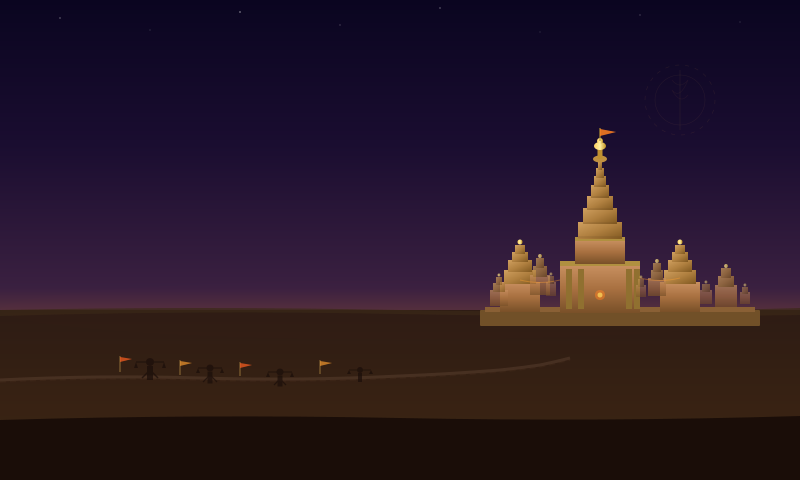
Temple Illustration
Photo gallery coming soon — curated images of Vaidyanath Jyotirlinga and its surroundings.
Vaidyanath Jyotirlinga in Deoghar, Jharkhand, is also called Baidyanath Dham or simply Deogarh — the abode of gods. The name Vaidyanath means "Lord of Physicians," identifying this form of Shiva as the healer of all afflictions — physical, mental, and karmic. The temple stands at the centre of a complex of twenty-two temples within a walled courtyard, each dedicated to different deities, making Deoghar one of the most architecturally concentrated sacred complexes among the Jyotirlingas.
The origin myth recorded in the Shiva Purana involves Ravana — the scholar-king of Lanka — who performed extreme penance on Mount Kailash, offering his ten heads one by one into the sacrificial fire to win Shiva's favour. Shiva, moved by this devotion, restored all ten heads and granted Ravana the boon he sought. As Ravana carried the linga southward toward Lanka, he was tricked into setting it down at Deoghar, where it became immovably fixed in the earth. Ravana's fingermarks are said to be visible on the linga. This myth connects Vaidyanath to themes of devotion, sacrifice, and the irresistible gravitational pull of sacred ground.
The Shravan pilgrimage at Deoghar is one of the largest sustained religious movements in Asia. During the month of Shravan (July–August), millions of Kanwariyas — pilgrims carrying saffron-coloured water pots — walk from the Ajgaibinath ghat on the Ganga at Sultanganj (roughly 105 kilometres away) to Deoghar on foot, barefoot, without setting the pots down. The journey can take four to seven days. The Ganga water is then offered in abhishek on the Vaidyanath linga. The scale of the Kanwar Yatra has made Deoghar one of the largest annual mass gatherings in the world. Devotees may offer Shiva Seva inspired by this sacred kshetra.
The Shravan Kanwar Yatra — carrying Ganga water 105 kilometres on foot — is the defining pilgrimage tradition. Abhishek with Ganga water brought by Kanwariyas is performed on the Vaidyanath linga. Early morning Mangala aarti is attended by pilgrims who have waited through the night. Five daily sevas maintain the ritual cycle year-round.
Deoghar is the nearest town in Jharkhand. Jasidih Railway Junction (JSME) is 7 km away — a major junction with direct trains from Kolkata, Delhi, Patna, and Ranchi. Deoghar Airport (DGH) has regular flights from Kolkata and Delhi. Local auto-rickshaws and taxis connect Jasidih to the temple in 20–30 minutes.
Timings may vary on festival days and may change seasonally. Verify with the temple administration before your visit.
Shravan month (July–August) for the Kanwar Yatra — the most significant occasion. Mahashivratri (February–March). October to March for comfortable weather outside the monsoon pilgrimage season. The Shravan period brings extraordinary crowds; arrive with accommodation arranged in advance.
What is the Kanwar Yatra at Vaidyanath?
The Kanwar Yatra is an annual pilgrimage during Shravan month in which millions of devotees (Kanwariyas) walk from the Ganga at Sultanganj — approximately 105 kilometres — to Deoghar, carrying water pots without setting them down. The Ganga water is then offered in abhishek on the Vaidyanath linga. It is among the largest religious gatherings in the world.
Why is this Jyotirlinga called Vaidyanath?
Vaidyanath means Lord of Physicians. This form of Shiva is worshipped as the divine healer who cures all ailments — physical, mental, and karmic. Devotees particularly seek Shiva's healing grace at this temple, and the myth of Ravana's restoration of all ten heads reinforces this quality of radical restoration.
✦ AI-Powered Itinerary
Tell us about yourself — Daanyam will craft a personalised yatra plan with darshan timings, auspicious dates, and practical guidance.
Vaidyanath Jyotirlinga is open: Year-round
Best visited October–March. Summers can be humid. Janmashtami (Aug/Sep) is the peak festival.