The story behind Karva Chauth
The vrat begins before dawn with sargi — a meal of fenia, sweets, fruit, and dry fruits prepared and sent by the mother-in-law. Through the day, the woman observes a strict nirjala fast (without food …
The vrat begins before dawn with sargi — a meal of fenia, sweets, fruit, and dry fruits prepared and sent by the mother-in-law. Through the day, the woman observes a strict nirjala fast (without food or water), wearing red, gold, or other shubh-rang vastra and mehndi, and gathers in the evening for the Karwa Chauth katha — the story of the four legends most commonly Veervati, Karva, and Savitri-Satyavan. The fast breaks only after the moon is sighted: traditionally through a sieve (chalni) held up to the moon, then the husband's face viewed through the same sieve, and finally water and food offered by the husband to the wife.
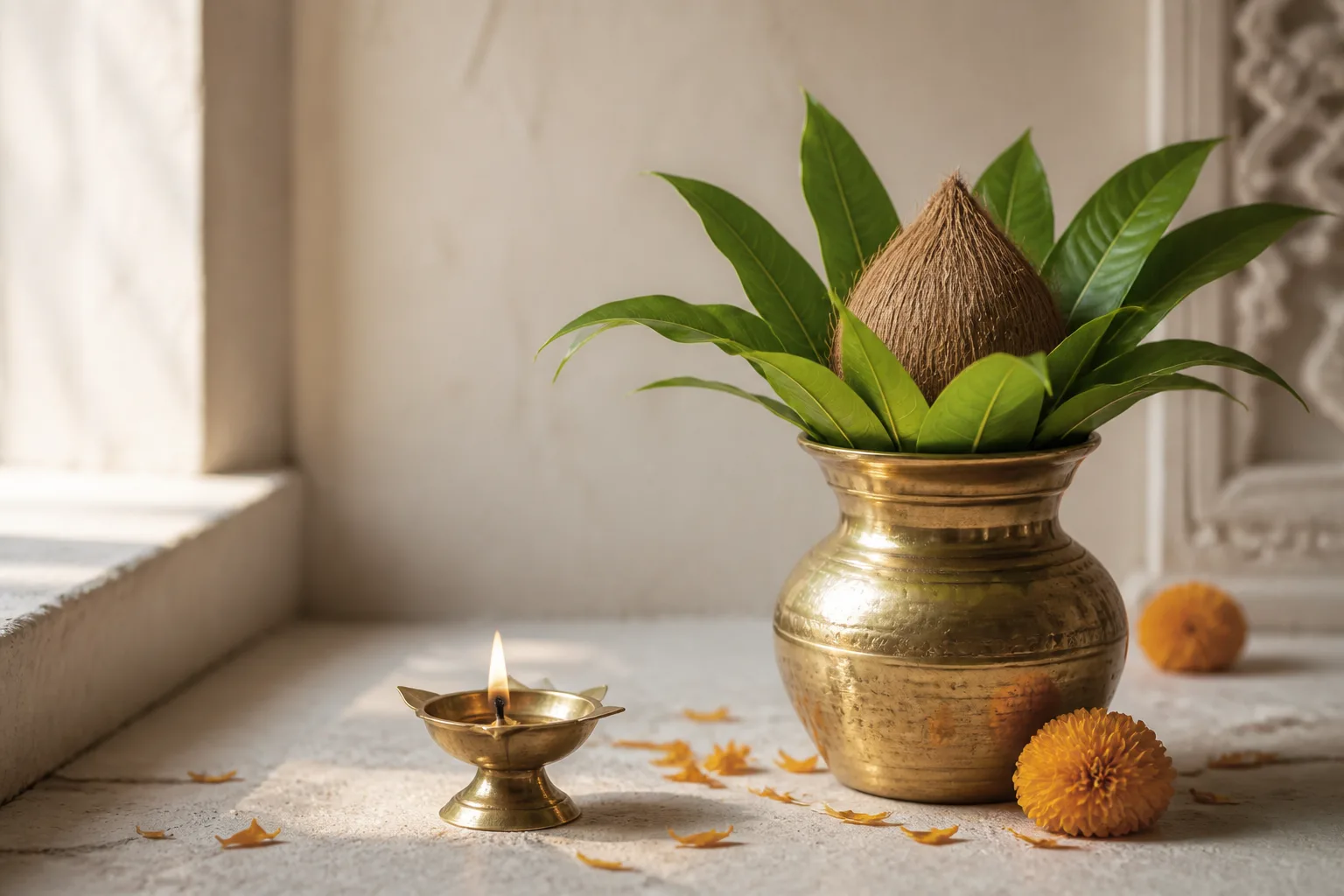
The katha and ritual centre on bhakti-shakti — the wife's devotion to her husband as a spiritual practice, and the protective grace of Goddess Parvati and Karwa Mata invoked through the fast. The karwa (a small earthen pot with a spout, filled with water and topped with a small clay dish of sweets) is the central ritual object, exchanged between women in the evening puja and offered to the moon along with arghya.